How engineers trace a hidden water leak
Kit that damages nothing narrows the search, usually thermal imaging, tracer gas and listening equipment, until the engineer can mark one spot. Then only that spot is opened up.
Call an engineer0333 567 2646Engineers across England, Scotland and Wales. A guide from ADI Leak Detection. Lines open 7:30am to 6:30pm, Monday to Friday.
How to check for a water leak yourself
Two quick tests tell you whether you have a leak at all, and roughly which system it is on. Neither needs tools.
Watch the water meter
To find out whether water is escaping, turn off every tap and anything that uses water, then note the meter reading. Wait an hour without using any water and check again. If the reading has changed, water is going somewhere. If there's no change, look at the heating instead.
Watch the boiler pressure
Most combi boilers have a pressure gauge on the front. If it keeps dropping after you've topped it up, and nobody has bled a radiator, that usually points to a leak in the heating system.
Write down what you notice
Damp patches, warm spots on the floor, the sound of running water with every tap off, flooring that has started to lift. Where and when you saw each one helps the advisor judge which kit the engineer should bring.
Thermal imaging leak detection
What it sees Heat
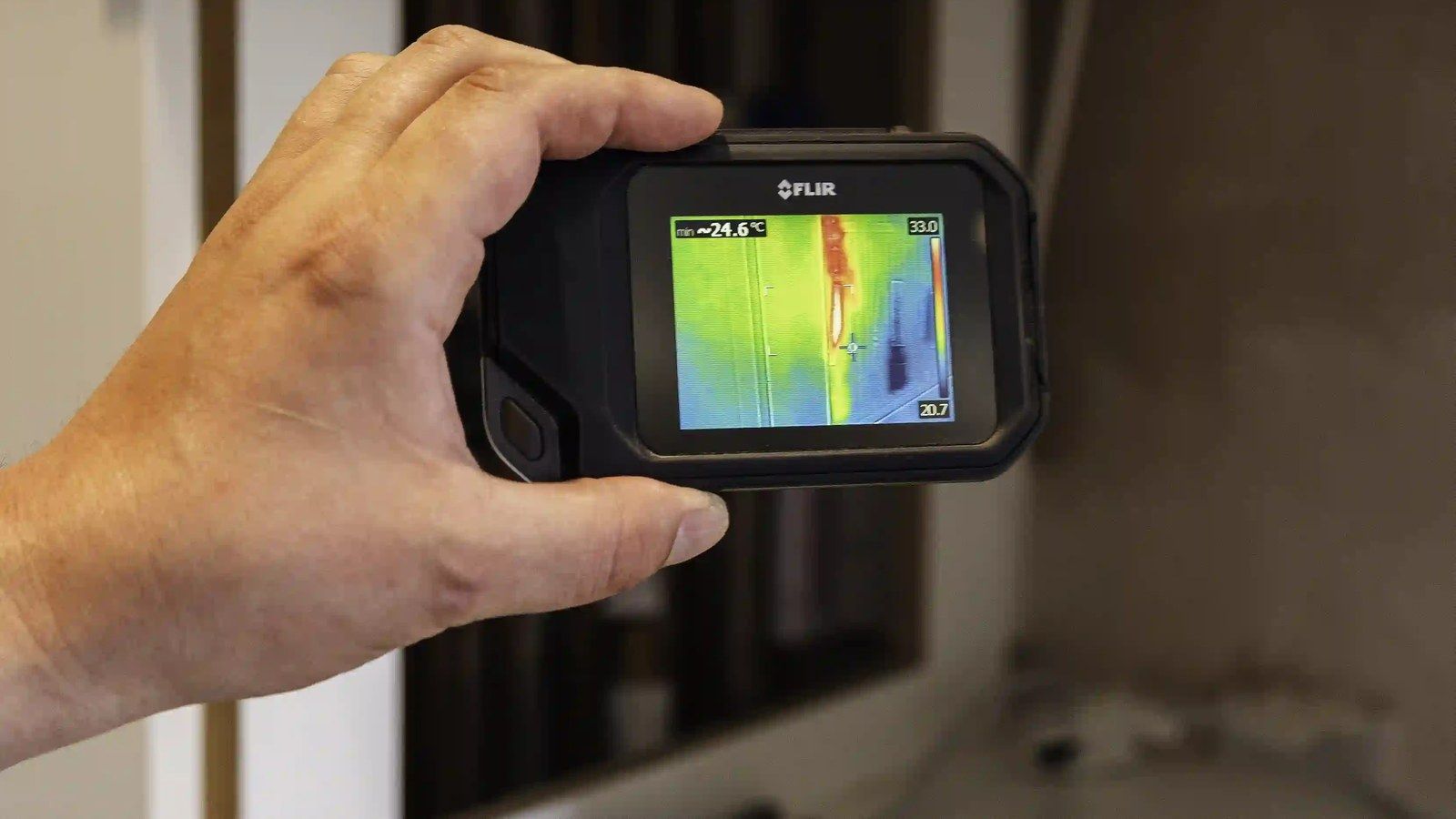
Hot water escaping from a heating pipe warms the floor or wall around it. A thermal camera shows that warmth as a bright bloom, and often picks out the route the pipe takes through the screed.
Best for central heating, underfloor heating and hot water pipes.
Tracer gas leak detection
What it sees Gas escaping through solid floors
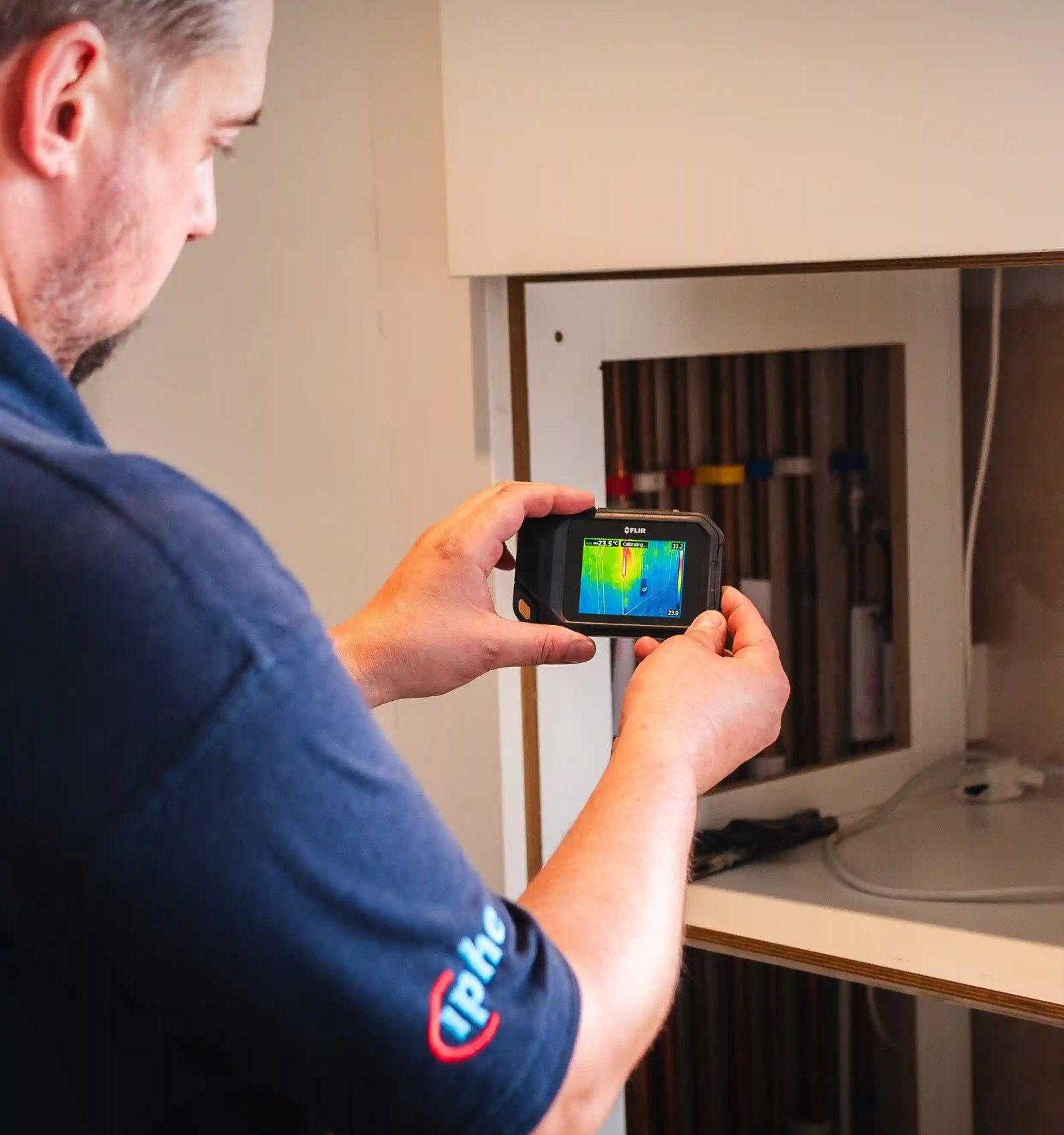
The engineer pushes a harmless tracer gas into the pipe under pressure. The gas finds its way out through the same hole the water did, then rises through concrete, timber or plasterboard, where a sensor wand picks it up.
Cold water pipes give off no heat for a camera to see, which is why tracer gas does most of the work on them.
Best for cold water pipes, water mains and anything under concrete.
Acoustic leak detection and correlators
What it sees Sound
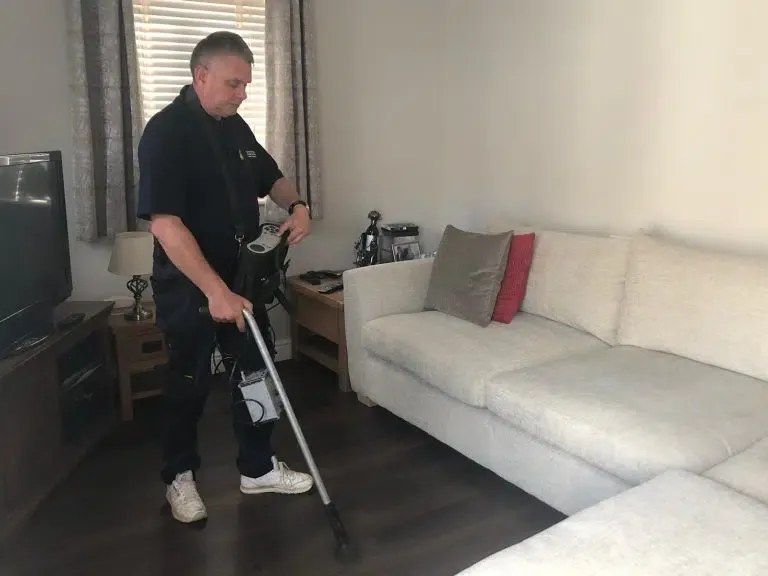
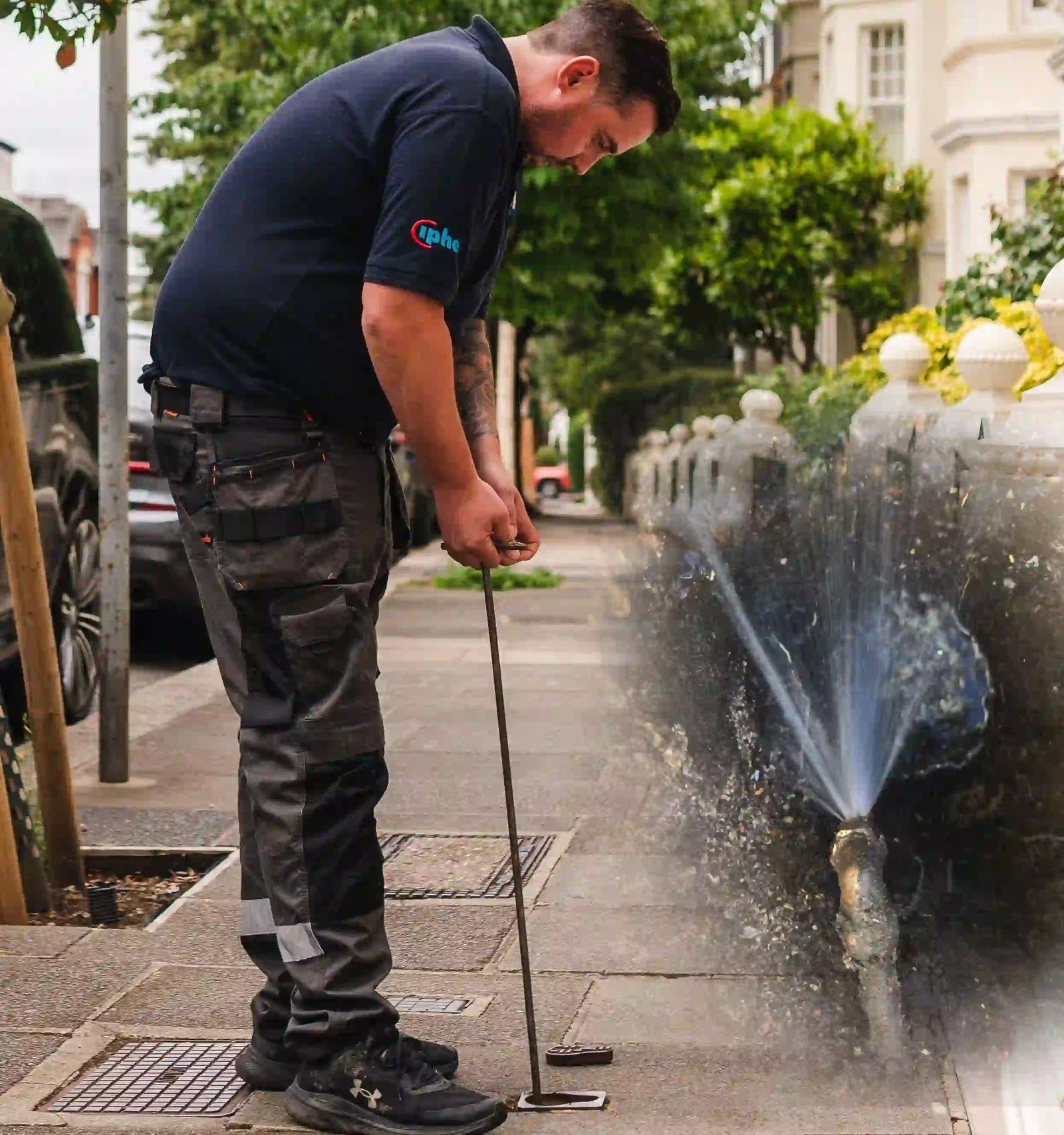
Water forced out of a pipe under mains pressure hisses. Ground microphones and listening sticks amplify that noise through soil, paving and tarmac.
A correlator goes a step further. It clips a sensor to the pipe at two points and times how long the same noise takes to reach each one, which gives a distance along the pipe.
Best for water mains and supply pipes under gardens and driveways.
Moisture meters and borescope cameras
What it sees Wet materials, and inside cavities
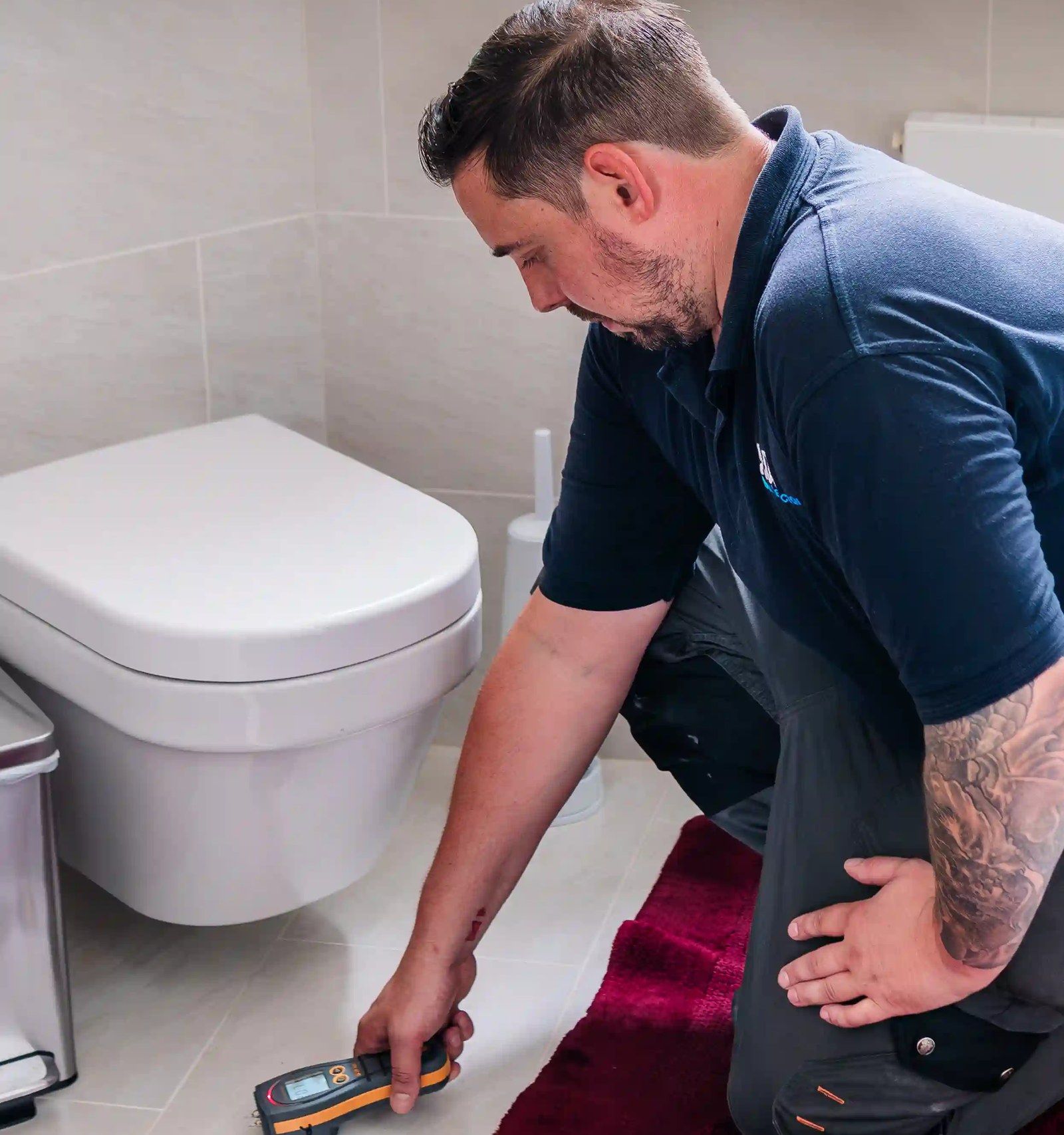
A damp meter reads how wet a wall or floor is. Taking readings in a grid shows where the damp is worst, which is usually close to the source.
A borescope is a camera on a thin flexible cable. Fed through a small hole, it looks inside wall cavities, under baths and shower trays and above ceilings without taking anything apart.
Best for bathrooms, ceilings and leaks inside walls.
Pressure testing and dye tests
What a pressure test sees Whether a pipe leaks at all
A section of pipework is isolated, pressurised and left with a gauge on it. If the needle drops, that section leaks. Testing sections one at a time narrows down which run to search.
What a dye test sees Water getting out of the wrong place
Fluorescent dye added to a toilet cistern, shower tray or waste pipe shows up wherever the water ends up. It catches leaks that only happen when a fitting is being used.
When a hidden leak can't be found
It is rare, but it is possible, and when it happens the reason is almost always access.
In blocks of flats, or where several homes share one water main, the engineer sometimes can't get to the place the leak starts. And some leaks sit where no non-invasive method can reach them. There are limits to what any kit can do, which is why ADI Leak Detection doesn't offer a blanket guarantee.
Before booking, the advisor asks enough questions to judge how likely your leak is to be found. On mains-fed water pipes that meet the conditions, there is no charge if the leak isn't found.
Talk to an engineer before you call your insurer
The first thing they'll ask is what you've noticed and where, so they can judge whether it sounds like a leak they can trace. They'll also tell you what the day would cost and what your insurer is likely to want to see.
Call an engineer0333 567 2646Lines open 7:30am to 6:30pm, Monday to Friday.